
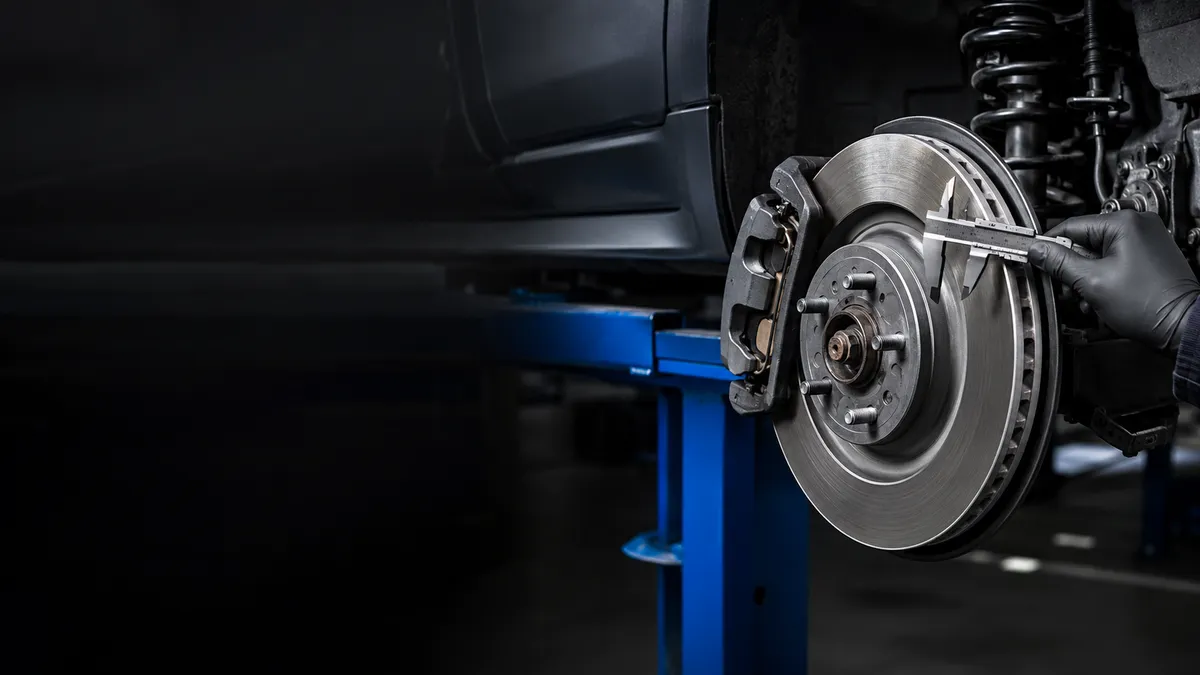
7 Warning Signs Your Brakes Need Attention
Your braking system is one of the most important safety systems in your vehicle. Changes in braking performance, unusual noises or warning lights should never be ignored. Brake components wear gradually, which means drivers can become accustomed to small changes over time. Recognising the early warning signs can help you arrange an inspection before braking […]
Your braking system is one of the most important safety systems in your vehicle. Changes in braking performance, unusual noises or warning lights should never be ignored.
Brake components wear gradually, which means drivers can become accustomed to small changes over time. Recognising the early warning signs can help you arrange an inspection before braking performance deteriorates further or worn components cause additional damage.
Here are seven common signs that your brakes may need professional attention from a qualified mechanic.
Squealing, scraping or grinding noises
Unusual noises are among the most recognisable signs of brake wear. A high-pitched squeal may indicate that the brake pad wear indicator is contacting the brake disc.
A grinding or scraping sound can be more serious. It may indicate that the brake pad material has worn significantly, allowing harder components to contact the brake disc.
Do not simply cover the noise
Brake noise should be investigated rather than masked with temporary products. A proper inspection is needed to determine whether the sound is caused by wear, contamination, damaged components or another issue.
Vibration through the pedal or steering wheel
A brake pedal or steering wheel that vibrates while braking may indicate uneven brake disc wear, excessive heat, component movement or another problem within the braking or suspension system.
The vibration may be more noticeable when slowing from higher speeds or when applying additional pedal pressure.
Because several different faults can create similar symptoms, the brakes and surrounding components should be inspected before deciding what repair is required.
A soft, spongy or unusually low brake pedal
Your brake pedal should normally feel consistent. If it becomes soft, spongy, travels farther than usual or approaches the floor, there may be a problem requiring urgent attention.
Possible causes can include air or moisture within the hydraulic system, low brake fluid, a fluid leak or a fault affecting another braking component.
- The pedal feels softer than normal
- The pedal travels farther before the brakes respond
- Pedal pressure changes between applications
- Brake fluid appears below the expected level
Do not continue driving normally if the pedal suddenly loses pressure or braking performance is significantly reduced.
Your vehicle takes longer to stop
Increased stopping distance may develop gradually and can be difficult to notice during everyday driving. You may find yourself pressing the pedal harder or beginning to brake earlier than before.
Reduced braking performance can be associated with worn brake pads, overheated components, hydraulic faults, unsuitable tyres or several other mechanical and road-condition factors.
| What you notice | Recommended response |
|---|---|
| Gradually reduced braking performance | Arrange a brake inspection as soon as practical |
| Sudden increase in stopping distance | Stop driving when safe and seek professional assistance |
| Braking changes in wet weather | Inspect brakes and tyre condition |
| Vehicle feels unstable under braking | Have the brakes, tyres and suspension assessed |
The vehicle pulls to one side while braking
A vehicle that moves or pulls noticeably to one side when the brakes are applied may not be braking evenly.
Possible causes can include uneven brake wear, a sticking caliper, hydraulic problems, tyre pressure differences or issues involving steering and suspension components.
The cause should be properly diagnosed rather than assuming that a wheel alignment alone will resolve the problem.
A brake or ABS warning light remains illuminated
A brake warning light can illuminate for several reasons, including an engaged parking brake, low brake fluid or a fault detected within the braking system.
An ABS warning light indicates that the anti-lock braking system has detected a problem. The vehicle may retain conventional braking, but the anti-lock function may not operate as intended.
Do not ignore dashboard warnings
Check that the parking brake has been fully released. If the warning light remains on, follow the vehicle manufacturer’s guidance and arrange an inspection.
A hot or burning smell after braking
A strong burning smell near a wheel after normal driving may indicate that a brake component is overheating or failing to release correctly.
Continuing to drive with an overheating brake can reduce braking performance and cause additional component damage.
If you notice smoke, extreme heat or a strong burning smell, stop in a safe location. Avoid touching the wheel or brake components and arrange professional assistance.
Which brake components may require inspection?
A complete braking system contains several parts that must work together. A professional inspection may include:
Brake pads
Friction material that presses against the brake discs and gradually wears through normal use.
Brake discs
Metal braking surfaces that may develop wear, scoring, heat damage or thickness variation.
Brake fluid
Hydraulic fluid that transfers pedal pressure through the braking system.
Calipers and hoses
Components responsible for applying the brakes and carrying hydraulic pressure safely.
Why early brake inspections matter
Brake wear rarely improves by itself. Continuing to drive with worn brake pads may cause damage to the brake discs and increase the scope and cost of the eventual repair.
Regular inspections can help identify worn components before braking performance changes significantly.
- Helps identify brake wear early
- Supports consistent braking performance
- May prevent damage to additional components
- Provides an opportunity to check brake fluid
- Helps prepare the vehicle for longer journeys
- Provides clearer information for future maintenance
Brake inspections and repairs in Braemar
ACE Automotive Services provides professional brake inspections and brake repairs from its workshop in Braemar.
Our workshop is conveniently located for drivers from Mittagong, Bowral, Moss Vale and surrounding Southern Highlands communities.
If your brakes are making unusual noises, the pedal feels different or your vehicle is not stopping as expected, our team can inspect the system, explain what has been found and recommend the appropriate next step.
Questions about brake wear and inspections
How long do brake pads normally last?
Brake pad life varies considerably depending on the vehicle, pad material, driving conditions, vehicle load and braking habits. Inspection is more reliable than relying on one fixed kilometre estimate.
Can I drive with squealing brakes?
Squealing can have several causes, including brake wear. Because the condition cannot be confirmed from the noise alone, arrange an inspection rather than ignoring it.
Why does my steering wheel shake when braking?
Brake disc variation, component wear or other braking, steering and suspension issues can cause vibration. A mechanic should inspect the vehicle to identify the actual cause.
Where can I have my brakes inspected in Braemar?
ACE Automotive Services provides brake inspections and mechanical repairs from its workshop at 4/3 Gantry Place, Braemar NSW 2575.
Do not ignore changes in your brakes.
Book a professional brake inspection with ACE Automotive Services in Braemar.