
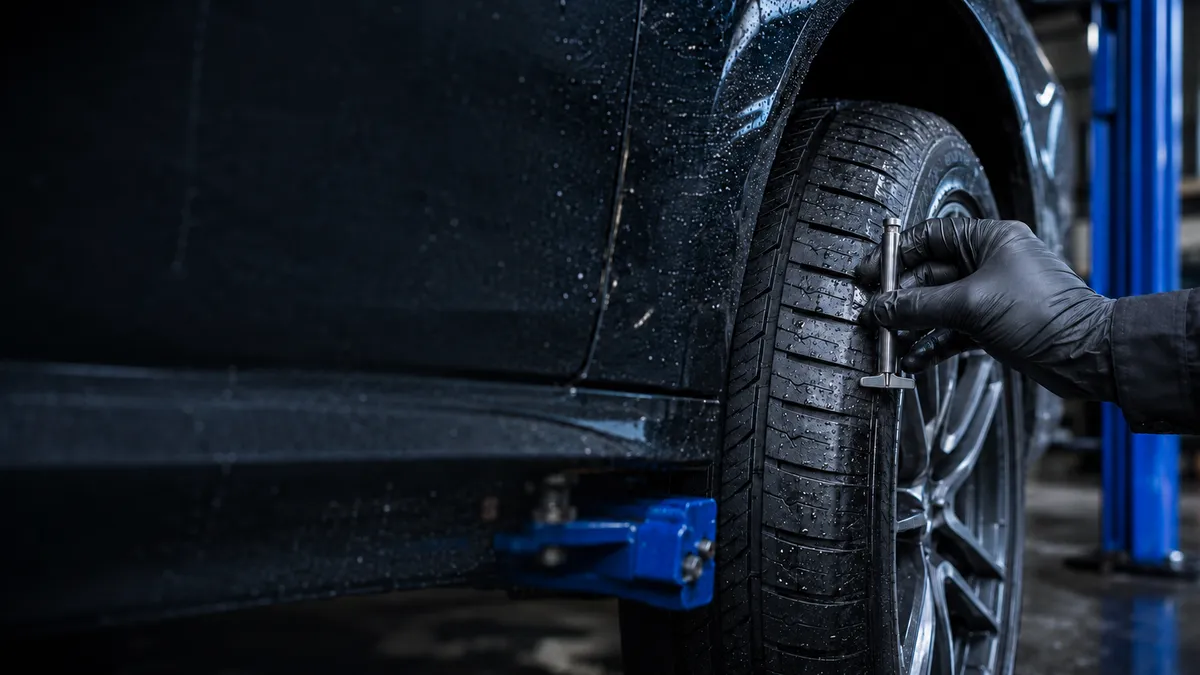
How to Prepare Your Car for Wet and Cold Southern Highlands Roads
The check engine light can appear for many different reasons, ranging from a relatively minor sensor issue to a fault that requires immediate attention. The warning light confirms that the vehicle’s onboard monitoring system has detected something outside its expected operating range. It does not, by itself, identify the faulty component or tell you which […]
The check engine light can appear for many different reasons, ranging from a relatively minor sensor issue to a fault that requires immediate attention.
The warning light confirms that the vehicle’s onboard monitoring system has detected something outside its expected operating range. It does not, by itself, identify the faulty component or tell you which repair is needed.
Understanding how the light behaves and arranging proper engine diagnostics can help prevent guesswork, unnecessary part replacement and potentially more expensive mechanical problems.
What is the check engine light?
Modern vehicles contain an onboard computer that monitors information from sensors throughout the engine, transmission, emissions and supporting systems.
When the computer identifies information outside its expected range, it can store a diagnostic trouble code and illuminate the check engine light.
The warning light is a starting point
The stored code identifies the system or condition in which a problem was detected. It does not always identify the component that caused the problem.
Testing and interpretation are still required before deciding which repair, if any, is appropriate.
Steady versus flashing check engine lights
The behaviour of the warning light can provide an indication of urgency. Always consult the owner’s manual for information specific to your vehicle.
| Warning behaviour | Recommended response |
|---|---|
| Light appears during startup and switches off | This is commonly part of the vehicle’s normal system check |
| Light remains steadily illuminated | Arrange a diagnostic inspection as soon as practical |
| Light flashes while driving | Reduce demand on the engine, stop safely and seek advice |
| Light appears with severe symptoms | Stop when safe and arrange professional assistance |
Do not assume that a steady light means the fault can be ignored indefinitely. A developing problem may affect performance, fuel consumption, emissions or other vehicle components.
Common reasons a check engine light may appear
Many different systems can trigger an engine warning. The following examples are possibilities rather than a diagnosis of your vehicle.
Sensor fault
A sensor may provide inaccurate, inconsistent or implausible information to the vehicle’s computer.
Ignition problem
Worn spark plugs, ignition coils or related components can contribute to poor combustion or an engine misfire.
Air intake issue
Unmetered air, intake leaks or incorrect airflow readings can affect engine operation.
Fuel delivery issue
Fuel pressure, injector performance or mixture problems may trigger a stored diagnostic code.
Emissions system fault
Components monitoring or controlling vehicle emissions may operate outside their expected range.
Wiring or connection problem
Damaged wiring, poor electrical connections or corrosion can interrupt communication between components.
What does a diagnostic scan reveal?
A diagnostic scanner communicates with the vehicle’s onboard systems and retrieves available fault information.
Depending on the vehicle and equipment being used, a scan may provide:
- Stored diagnostic trouble codes
- Pending or intermittent fault codes
- Live sensor information
- Recorded operating conditions
- System status and readiness information
- Communication faults between vehicle modules
This information helps narrow the investigation, but it must be interpreted in the context of the vehicle’s symptoms and test results.
Why reading a fault code is not a complete diagnosis
A common mistake is to treat a diagnostic code as an instruction to replace a particular part. In reality, several different problems can produce similar fault information.
For example, a code relating to a sensor reading does not necessarily mean the sensor itself has failed. The reading may be affected by wiring, an air or fluid leak, another mechanical fault or an operating condition elsewhere in the system.
Diagnosis should come before parts replacement
A scan provides direction. Further inspection and testing are used to establish why the code was recorded and which repair is actually needed.
What happens during professional vehicle diagnostics?
The diagnostic process should combine electronic information with physical inspection and mechanical testing.
| Diagnostic stage | What it involves |
|---|---|
| Customer information | Understanding the symptoms, conditions and recent history |
| Initial inspection | Checking visible components, connections and fluid levels |
| Electronic scan | Retrieving codes, recorded data and available live information |
| Targeted testing | Testing the circuit, component or mechanical system involved |
| Repair recommendation | Explaining the findings and appropriate next step |
| Verification | Confirming operation after an approved repair is completed |
Other symptoms that may accompany the warning light
Make a note of any change in how the vehicle starts, sounds or drives. This information can be useful during diagnosis.
- Reduced engine power
- Rough or uneven idling
- Engine hesitation
- Difficulty starting
- Increased fuel consumption
- Unusual exhaust smoke
- Strong fuel or exhaust smell
- Engine vibration or misfiring
If the vehicle is overheating, losing oil pressure, producing heavy smoke or making severe mechanical noises, stop driving when safe and seek professional advice.
Can you reset the check engine light yourself?
Disconnecting the battery or clearing a fault code may temporarily switch off the warning light, but it does not repair the condition that triggered it.
If the fault remains present, the warning can return. Clearing stored information too early may also remove useful diagnostic evidence and make an intermittent problem more difficult to investigate.
The priority should be understanding why the light appeared rather than simply removing it from the dashboard.
How early diagnostics can save time and money
Investigating a fault early can reduce the risk of a developing issue affecting additional components.
Accurate diagnosis also reduces guesswork. Replacing parts without confirming the cause can result in unnecessary expense while leaving the original problem unresolved.
- Helps identify faults before they develop further
- Reduces unnecessary parts replacement
- Provides clearer repair recommendations
- Supports more efficient workshop time
- Helps protect vehicle reliability
- Creates a record of intermittent problems
Professional engine diagnostics in Braemar
ACE Automotive Services provides vehicle and engine diagnostics from its workshop in Braemar for drivers throughout the Southern Highlands.
Our location is convenient for customers from Mittagong, Bowral, Moss Vale and surrounding communities.
If your check engine light has appeared or your vehicle is no longer performing normally, our team can retrieve the available diagnostic information, investigate the symptoms and explain the recommended next step.
Questions about engine warning lights
Can a check engine light switch off by itself?
It can switch off if the vehicle no longer detects the condition over a particular number of operating cycles. However, stored fault information may remain and the underlying problem may be intermittent.
Does the check engine light always mean an expensive repair?
No. The light can be triggered by many different conditions. The repair cost cannot be determined accurately until the vehicle has been properly diagnosed.
Can a mechanic diagnose the problem from the code alone?
A code helps identify the system in which a fault was detected. Inspection and testing may still be required to identify the actual cause.
Where can I book vehicle diagnostics in Braemar?
ACE Automotive Services provides engine and vehicle diagnostics from its workshop at 4/3 Gantry Place, Braemar NSW 2575.
Find out what your vehicle is trying to tell you.
Book professional vehicle diagnostics with ACE Automotive Services in Braemar.